Disclaimer: The following blog post contains major spoilers for My Hero Academia. If you haven’t watched the series or are still following the story at your own pace, I strongly encourage you to do so before reading! The journey of Izuku Midoriya and his fellow heroes is filled with emotion, growth, and unforgettable moments that are best experienced firsthand. Watching the show not only allows you to fully appreciate the characters’ arcs and world-building but also deepens your connection to the powerful themes explored throughout. While My Hero Academia explores inspiring themes of courage, sacrifice, and hope that resonate with many values, it is important to note that the series is not explicitly Catholic and contains intense scenes of violence, moral ambiguity, and mature themes—making it most suitable for older teens and up, with parental guidance recommended for younger viewers.
While My Hero Academia is a modern, secular anime centered on superpowered individuals in a contemporary world, it incorporates themes that resonate with Catholic teachings, particularly the ideas of sacrifice, unity, redemption, and the sanctity of life. The character of Izuku Midoriya (Deku) embodies a Christ-like figure through his selfless dedication to protecting others, even at great personal cost—mirroring Christ’s sacrificial love. His journey from a powerless boy yearning to be a hero to a symbol of hope reflects the Catholic ideal of grace working through human frailty. Additionally, the concept of “quirks” as gifts from a divine or cosmic source can parallel the Christian belief in talents bestowed by God, emphasizing stewardship and responsibility. The series also explores moral growth and forgiveness, especially in characters like Shoto Todoroki, whose path toward healing and reconciliation echoes the Catholic emphasis on mercy and repair. Though not overtly religious, My Hero Academia’s narrative depth invites viewers to reflect on virtues like humility, compassion, and the redemptive power of love—values deeply rooted in Catholic tradition.
Strength in Communion
At its core, My Hero Academia redefines strength not as solitary power or individual glory, but as something forged in connection—through trust, sacrifice, and the willingness to stand beside others. This idea of strength in communion mirrors a profound truth echoed in Catholic teaching: that true power is revealed not in dominance, but in service and love. In the series, the heroes grow not through isolation or sheer force, but through mentorship, friendship, and the support of a community—each bond deepening their resolve and purpose. The show reveals that vulnerability is not weakness, but a gateway to deeper unity; when characters open themselves to others, they become stronger not just as individuals, but as part of a greater whole. This reflects a deeper truth: real strength lies not in what one can do alone, but in the courage to rely on others and to give oneself for the good of the many—an echo of the Christian call to love one another as Christ loved us.
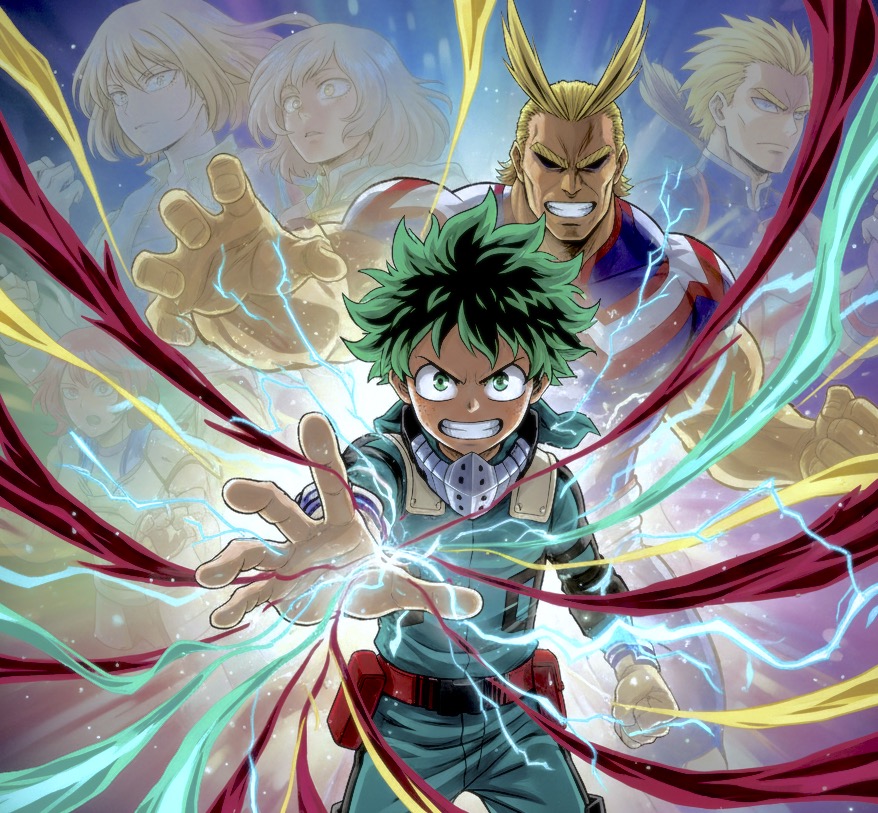
When Izuku Midoriya, the protagonist, rises from being a “quirkless” boy to become the inheritor of All Might’s power, he does so not through brute strength, but through his unwavering belief in others. The “One for All” quirk Midoriya receives powerfully symbolizes the idea that true power is not inherited or hoarded, but passed down through generations as a shared responsibility. Far from being a mere weapon of individual might, One for All represents the collective will, sacrifice, and hope of countless heroes who came before—each life lived in service shaping the next. When Midoriya receives it, he doesn’t just gain strength; he inherits a legacy of unity, reminding viewers that greatness is not achieved alone but through connection to others. The quirk’s very name—“One for All”—echoes the ideal of self-giving love: strength is amplified by placing oneself in service to the whole. In this way, One for All becomes more than a power—it’s a living testament to the truth that real strength flourishes not in dominance, but in communion.
Midoriya’s greatest strength isn’t just in the power of One For All—but in his profound humility to receive it. Unlike those who crave power for dominance, Midoriya understands that true strength comes not from taking, but from trusting, learning, and accepting help from others. This humility becomes the cornerstone of his heroism: he carries One For All as a sacred responsibility passed down through sacrifice and love. In contrast to the idea of “All For One”—a single hero wielding all power—Midoriya embodies “One For All”: a spirit where every person’s support, courage, and faith contribute to a greater good. His power grows not in isolation, but in community, proving that real heroism lies not in individual might, but in the collective love and trust that uplifts us all.
Encouragement as a Sacrament of Hope
Encouragement plays a vital role in the hero’s journey within My Hero Academia, serving as both a spark and a lifeline for characters navigating fear, self-doubt, and overwhelming challenges. In a world where power is often equated with worth, the moments of genuine encouragement—whether from mentors like All Might, friends like Bakugo or Ochaco, or even strangers who believe in a hero’s potential—become transformative. These words don’t just boost confidence; they affirm identity, reminding the protagonist that they are not alone and that their struggles have meaning. For Midoriya, encouragement is often the quiet force that carries him through despair, reinforcing that heroism isn’t born from perfection, but from perseverance fueled by belief in oneself and others. In this way, the series teaches a deeper truth: every hero’s path is shaped not only by trials, but by the kindness, faith, and hope others extend—proving that strength is often kindled not in isolation, but in the warmth of human connection.It carries the belief that every person has dignity and potential because they are made in God’s image. Throughout My Hero Academia, characters repeatedly lift one another up—even when they’re struggling. Shoto Todoroki’s journey from isolation to connection is profoundly shaped by his friends’ unwavering support. When he nearly gives up, it’s not a sudden burst of power that saves him—but the words of his classmates reminding him he’s not alone. In Catholic teaching, this mutual care is part of the virtue of charity—the selfless love that binds the faithful together. The series beautifully shows how encouragement isn’t just emotional—it’s transformative. It can heal wounds, restore purpose, and ignite courage in even the most broken hearts.
Mutuality: Love That Builds Up, Not Exploits
At the heart of My Hero Academia lies a powerful, transformative theme of mutuality—where strength, growth, and salvation are not achieved in isolation, but through deep, reciprocal relationships built on sacrifice, trust, and shared purpose. The show consistently portrays heroism not as an act of individual triumph, but as a collective journey in which each person’s self-gift becomes the foundation for another’s strength. This dynamic is most poignantly embodied in the legacy of “One for All,” the power passed down through generations not by force or inheritance, but through choice—each previous user sacrificing their health, time, and even life so that the next could carry on the mission. All Might’s final act of transferring his power to Midoriya is not just a transfer of ability; it is a profound spiritual offering, rooted in love and trust. In return, Midorya doesn’t merely inherit the power—he inherits a responsibility to live it with humility, compassion, and unwavering dedication. This mutual exchange continues throughout the series: characters like Shoto Todoroki find healing through the courage to accept help and extend it in return; Bakugo Katsuki, despite his pride, learns that true strength is forged not in rivalry, but in protecting those he once dismissed. Even in moments of despair—when heroes fall, when dreams are shattered—the show insists that self-sacrifice is never wasted. It is through giving oneself—whether through a moment of bravery, a word of support, or a quiet act of service—that individuals become part of something greater. In this way, My Hero Academia reveals a deeper truth: the most enduring power in the world is not physical might, but the willingness to lay down one’s life for others, knowing that in that self-gift, both giver and receiver are transformed. It is through mutuality—through shared vulnerability, sacrifice, and love—that the hero’s journey becomes not just a path of personal growth, but a sacred act of communion.
Ultimately, My Hero Academia invites us to reconsider what it means to be a hero. In the Catholic tradition, true heroism isn’t measured by strength or fame, but by self-giving love. The heroes in this series are not just fighting villains; they’re modeling what it means to live out sacrificial love for others. Midoriya refuses to write anyone off—even those who have chosen darkness. Even when faced with villains whose actions are cruel or destructive, he doesn’t abandon hope in their capacity for good. He sees pain behind the rage, trauma behind the mask, and believes that every person—no matter how broken—deserves understanding and a chance at redemption. This relentless pursuit of empathy isn’t naivety; it’s the heart of his heroism. Just as Christ reached out to sinners, Midoriya extends compassion not because they are worthy, but because they are human. His unwavering belief that no one is beyond healing reflects a deeply Catholic vision of mercy and grace—where redemption is always possible, and love persists even in the deepest shadows. In a world that often demands revenge or retribution, Midoriya chooses the harder path: to see the good, to listen, and to believe in redemption and transformation.
Final Thoughts: A Hero for Everyone
Ultimately, My Hero Academia delivers a profound and enduring message: every human being possesses inherent dignity—not because of power, perfection, or popularity, but simply because they are worthy of love and belonging. The series consistently affirms that true worth is not measured by strength or status, but by the courage to care, to serve, and to give oneself for others. Whether it’s Izuku choosing to protect even those who fear or reject him, or a fallen hero passing on their final hope to a new generation, the show celebrates self-giving love as the highest form of humanity. In a world where quirk powers can divide and endanger, the characters who rise above are those who remember that dignity is not earned—it is lived. Through sacrifice, compassion, and unwavering belief in one another, they demonstrate that love is not passive; it is active, sacrificial, and transformative. In the end, My Hero Academia does not just tell stories of heroes with powers—it tells a story of what it means to be human: flawed, fragile, yet capable of extraordinary grace when we choose to love, protect, and uplift one another. It is a testament to the sacredness of every life, and the revolutionary power of self-giving love in a world that so desperately needs it.